Reflections on leadership more than 20 years after the EMBA
Academic Director Brandon Erlacher’s classmates discuss how the Notre Dame Executive MBA still resonates 20 years after their 2005 graduation.
Published: February 24, 2026 / Author: Courtney Ryan

EMBA suite in Chicago in 2009. (Photo by Matt Cashore/University of Notre Dame)
The Executive MBA at the University of Notre Dame’s Mendoza College of Business sets itself apart from peer institutions by measuring its graduates’ success by the enduring positive impact they create in the world, not just financial performance.
When the program was founded in 1982, business leaders were just starting to embrace the idea of shaping organizations through a top-down corporate culture. Against that backdrop, its focus on ethical leadership wasn’t simply innovative—it was radical. Today, as the business landscape changes by leaps and bounds year after year due to rapid technological advancements and globalization, grounding the Notre Dame EMBA’s ethos in a values-based tradition solidifies it as a safe harbor amid a sea of constant change.
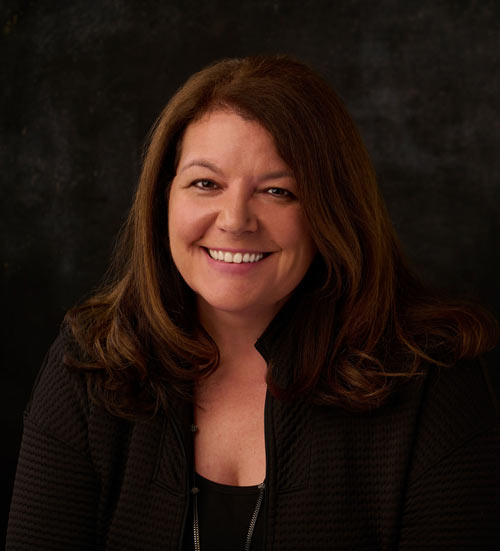
Carolina Mata (EMBA ’05)
Students enrolling in the EMBA have often weathered a decade or more managing organizations through unrelenting tumult. They arrive intent on advancing their careers and making sense of a rapidly evolving business landscape. They depart transformed, equipped with strategic insight, a deeper ethical grounding and a lifelong community that supports them throughout their careers and their lives.
“It is a really unique place because of the value system at Notre Dame,” said Carolina Mata (EMBA ’05), senior vice president of employee communications at Integral and associate professor at Post University. “The overall network that you establish is not just about building a professional network, either. It is a network of people with shared values, understanding, trust and support for each other. That’s really unmatched and I think that’s the strongest thing about Notre Dame.”
Mata graduated from the program when it was just over two decades old, adding a nuance to her reflections today given that another 20-plus years have passed. The 2025-26 academic year also marks 20 years since the graduation of Mata’s classmate and friend Brandon Erlacher (EMBA ’05 MSBA ’16), academic director of the Executive MBA, who draws on that very network to oversee an intensive curriculum focused on self-awareness and leadership development.
“My time in the EMBA program was life-changing,” reflected Erlacher. “I forged many friendships and gained the time and perspective needed to refine my leadership skills and define the professional and person I wanted to become.”

Brandon Erlacher (EMBA ’05 MSBA ’16)
Erlacher’s cohort from 2005 includes an array of C-suite executives, entrepreneurs, academics, municipal leaders and military officers. Don Moul, who was part of the cohort l, is now the CEO of the Tennessee Valley Authority, Warren Davidson is a member of the U.S. House of Representatives for Ohio.
Classmate Matthew Keown (EMBA ’05) agrees with Erlacher’s assessment of the program’s ability to refine leadership skills. By forging partnerships within the technology sector, Keown is a driving force behind vendor finance company DLL Group’s expansion into the Americas. Through this experience, he has encountered all manner of leadership styles in his field and immediately recognizes those who exemplify the principles taught at Mendoza.
“I promise you, I see an awful lot of managers at the companies that I work with, but I don’t see a lot of leaders,” said Keown, who also acknowledged that he landed all five jobs he’s had since his time at Notre Dame directly because of the EMBA network. I travel a lot internationally and have been everywhere from Tokyo to South Africa, but anytime I wear the Notre Dame brand, somebody says something to me.”
The University’s global reputation, coupled with the EMBA’s close-knit community, drew Thom Kenney (EMBA ’05) to the program as well. “When I spoke to a few previous EMBA graduates, they were all really inspirational,” he recalled of his first visit to South Bend.

Matthew Keown (EMBA ’05)
A prolific entrepreneur in the software sector, Kenney has used his career to bridge the gap between innovation and impact, including his service in the U.S. Army Reserve, where he commanded the 416th Civil Affairs Battalion (Airborne) in San Diego. His latest startup, Tycho.AI, is building a leading-edge autonomous intelligence for unmanned vehicles. Previously, he was the director of AI and digital transformation for Google Public Sector and the chief data officer and head of AI at U.S. Special Operations Command.
When Kenney arrived at Notre Dame, he already had a number of stints as CEO and CTO under his belt. “For me, it was more about, how do I give back to my community, my country, to the world?” His EMBA experience became paramount not long after he graduated and was serving as a Civil Affairs officer in Afghanistan.
“That was a fantastic leadership challenge because I had to lead and motivate through influence rather than through authority,” said Kenney, who also credited the motto “God, Country, Notre Dame” as an enduring refrain calling him to service. “I have so many great experiential tools in my toolkit, and that’s something that only the Notre Dame experience could have given me.”
As the world becomes more globally connected and business becomes more purpose-driven, the Notre Dame EMBA has only become more relevant.
“Back in 2003 to 2005, it really started becoming evident that there was an integration and intertwining of politics and business, and now we’re seeing more of that,” said Keown. “By emphasizing how to lead with integrity and how to lead instead of manage, the program is really differentiating itself.”
Mata, an ICF associate certified coach, said that whether attending the Notre Dame EMBA today, 20 years ago or 20 years from now, it is a rare opportunity to achieve clarity and purpose under the guidance of exceptional professors and classmates.

Thom Kenney (EMBA ’05)
“I think that when most people leave that experience, they wish it wasn’t over, so the key is to stay in the moment and be present,” she said of those enrolling today. “It’s not just the professors, it’s the whole experience. Use it, be curious, ask questions, think about what isn’t being said as much as what is being said and ponder what’s happening.”
Kenney said that Notre Dame’s perspective on character and selfless service is especially crucial for today’s business leaders as they navigate a polarized political landscape alongside economic and environmental uncertainty. As the gaps between people widen, those who are driven to find or establish common ground between disparate groups will become increasingly valuable.
“The biggest challenge the EMBA program and business in general has is the pace of technological change because it is impacting businesses today unlike anything in our history, even the industrial revolution,” said Kenney. “What we’re seeing with generative AI and large language models is changing so fast and so dramatically. For the program to understand those impacts and help students understand what it means to lead both people and technology will become one of the most important aspects of leadership in the future.”