
News
-
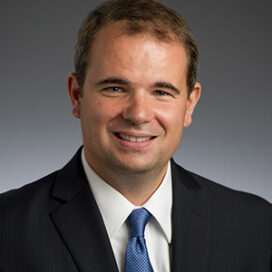 Mendoza Team awarded Poverty Research grant
The Notre Dame Poverty Initiative announced four awards, including one for a project led by Mendoza College of Business marketing professor Frank Germann.
Emily Nye -
 Why letting customers keep their returns creates loyalty
Forbes examines research from the Mendoza College of Business that shows letting customers keep returns leads to positive brand perception.
Forbes -
 No credit history? You might have another way to prove creditworthiness
Research reveals how retail transaction data can be used to create reliable credit scores for individuals without formal credit histories.
Shannon Roddel -
 School shootings leave lasting scars on local economies, research shows
Fatal school shootings don’t just devastate communities emotionally – they also harm their economies according to marketing professor John Costello and his co-authors in a piece for The Conversation.
The Conversation -
 Are ‘just keep it’ return policies loyalty builders?
A new study finds while the primary reason for “just keep it” return policies may be to help retailers save money, they also pack a sizeable goodwill benefit.
Retail Wire -
 His Lens on Life
2025 Faculty Award recognizes Robert Easley’s vision for an interdisciplinary approach to teaching analytics.
Ty Burke -
 Workplace mistreatment may affect observers as strongly as victims
Researchers found that observing bad behavior at work can have a surprisingly strong impact on people, even those not directly involved.
Fast Company -
 AI’s next frontier: Bridging the gap between knowledge work and skilled labor
Corey Angst’s research reveals how manufacturing workers might implement AI tools to improve efficiency and quality control.
Courtney Ryan -
 ‘Returnless returns’ boost brands among consumers
Returnless returns can increase brand support by fostering goodwill, according to a study by John Costello and Christopher Bechler.
Shannon Roddel -
 Why companies with more female board members have better workplace safety
A new study says companies with more women on their boards—and men who listen to what they say—are better at keeping their employees safe from workplace accidents.
Inc.